Introduction
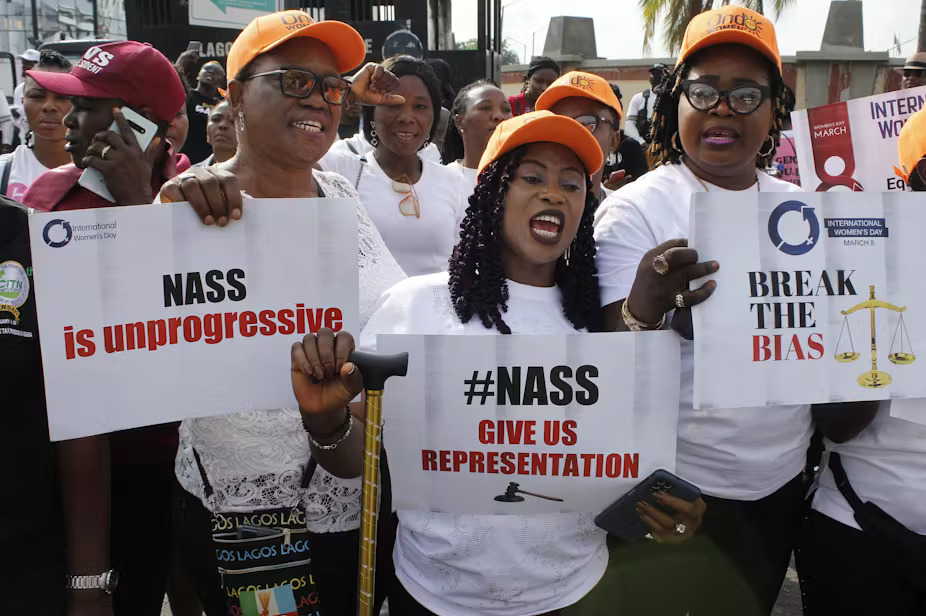
Despite years of policy dialogue and global frameworks, Nigerian women still face formidable hurdles in political inclusion, economic opportunity, and access to education. These gaps are not merely gender issues; they represent fundamental development failures.
With women holding only 3.9% of seats in the House of Representatives and 3.1% in the Senate in 2023, coupled with 917 maternal deaths per 100,000 live births, and a female literacy rate of 59% compared to 74% for males, the figures speak volumes: Nigeria is not doing enough.
This article explores the historical, legal, economic, and cultural challenges that continue to limit Nigerian women. It then presents actionable reforms, drawing on global best practices and local realities, to genuinely advance gender equality. Ultimately, women’s empowerment is not just a moral imperative; it is a clear path to good governance, sustainable development, and long-term social stability.
Historical and Legal Context
Historically, Nigerian women such as Queen Amina of Zazzau and the Aba women protesters of 1929 exercised significant power in governance and trade. However, British colonial structures erased their agency by excluding women from formal political and economic systems.
This pattern persisted post-independence. Nigeria’s 1979 Constitution failed to enshrine gender-specific protections or affirmative action measures. It was not until the 2006 National Gender Policy that a 35% affirmative action quota was formally proposed. Despite this, it remains largely unenforced due to lack of political will and insufficient legal backing.
Although Nigeria has ratified key international frameworks such as CEDAW and the Maputo Protocol, these have not been domesticated. This means they are not legally enforceable in Nigerian courts, effectively rendering them toothless.
Socioeconomic and Institutional Barriers
Political Representation
- As of 2023, women held only 4.7% of seats in the National Assembly, far below the global average of 26.5%.
- The 2006 National Gender Policy advocated for 35% affirmative action, but enforcement has been weak.
- Currently, women constitute only 3.1% of the Senate and 3.9% of the House of Representatives.
- Alarmingly, 15 out of 36 State Houses of Assembly have no female members.
- In the 2023 elections, 380 women contested National Assembly seats; only 3 out of 92 senatorial candidates won.
Education
- Primary enrolment for girls has improved, but dropout remains high due to child marriage (43% married before 18), teenage pregnancy, and economic pressures.
- Female literacy stands at 59%, compared to 74% for males.
Health
- Nigeria has one of the highest maternal mortality ratios in the world: 917 deaths per 100,000 live births.
- In 2020 alone, about 82,000 women died from pregnancy-related complications.
- Contributing factors: lack of skilled birth attendants, inaccessible rural clinics, poor antenatal care.
Economic Participation
- Women dominate the informal sector, with 48.5% labour force participation, but most are in low-wage, unregulated jobs with little access to credit or social protection.
Cultural and Religious Dynamics
- Patriarchal norms limit women’s education, employment, and property rights.
- Customary inheritance laws in some regions deny women land ownership.
- Child marriage remains widespread (44% married before 18, over 24 million child brides).
- Religious and cultural leaders often reinforce restrictive gender roles.
Why Women’s Representation Matters
- Peace agreements are 35% more likely to last 15 years when women participate.
- In Rwanda, where women hold 61% of parliamentary seats, legislation on domestic violence, land rights, and education has flourished.
- Nigerian women showed leadership during the COVID-19 pandemic, mobilising communities where government response was weak.
Pathways to Empowerment
Legal Reforms
- Domesticate CEDAW and the Maputo Protocol.
- Codify the 35% affirmative action quota into electoral law.
- Enact constitutional amendments mandating gender equality.
Political Representation
- Introduce mandatory gender quotas for elective and appointive offices.
- Reduce the cost of running for office.
- Enforce zero-tolerance policies against gender-based political violence.
Education and Skills Development
- Implement conditional cash transfers for parents who keep girls in school.
- Provide free sanitary products in schools.
- Introduce comprehensive sexuality education and support for teenage mothers.
Economic Inclusion
- Expand access to credit through initiatives like BOI’s Women Empowerment Fund.
- Provide business training, tax exemptions, and cooperative credit schemes.
Cultural Shift
- Engage traditional rulers and religious clerics in advocacy campaigns.
- Use community dialogues and national media to promote positive masculinity and women’s leadership.
International Comparison
Rwanda
- Implemented a 30% gender quota post-genocide; now women hold 61.3% of lower house seats.
- Established a Gender Monitoring Office to enforce gender budgeting and inclusion.
- Women own over 36% of businesses, supported by government-backed training and financing.
- Female literacy rose from 57% (2005) to 71% (2020); maternal mortality dropped to 234 per 100,000 live births (2022).
Senegal
- Passed a Gender Parity Law (2010) requiring party lists to include equal men and women.
- Result: 43% female representation in parliament, compared to Nigeria’s 4.7%.
- Enforcement is straightforward via electoral law, without constitutional amendment.
- Public education campaigns helped foster cultural acceptance.
Conclusion
Nigeria’s current trajectory sidelines half its population, limiting democracy, economic growth, and human development. Women’s underrepresentation is not just a gender issue—it is a governance, education, and public health crisis.
To build a thriving Nigeria, women must be included at the decision-making table—not as tokens but as leaders. Gender equality must move from slogans to laws, from policies to enforcement, from promises to measurable reforms.





Responses (0)